Power needs report
Resource adequacy and energy transition in the Pacific Northwest
By The Economic Alliance of Lewis County
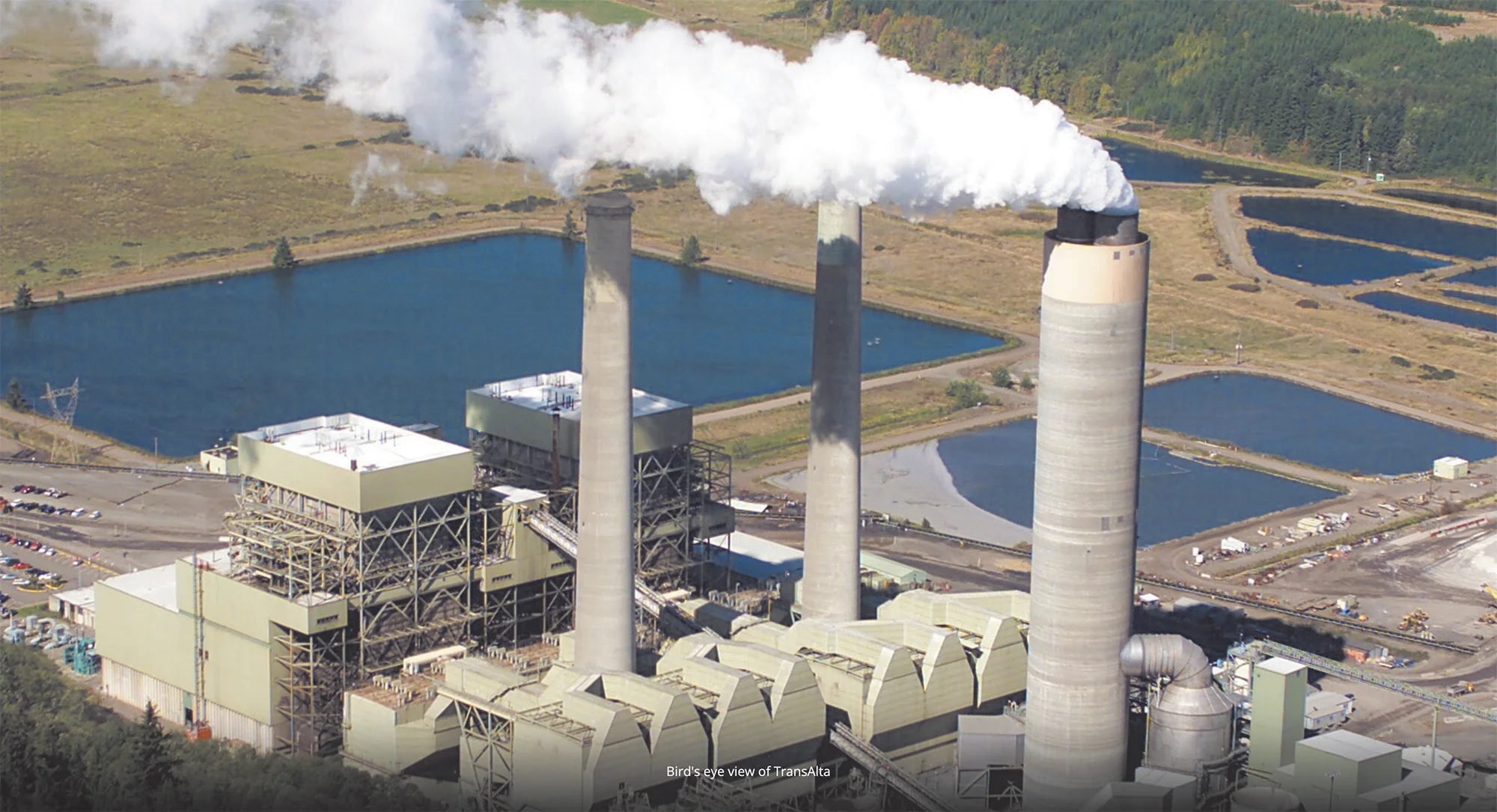
Earlier this month, a study titled Resource Adequacy and the Energy Transition in the Pacific Northwest was published by the consultant group Energy+Environmental Economics (the E3 group).
In the past year, E3 has been studying the current and future resource adequacy (RA) situation in the Pacific Northwest region on behalf of a large consortium of utilities and independent power producers. The study examines means for maintaining reliability and affordability for Northwest electricity consumers while meeting both state mandated and voluntary clean energy goals. Topics addressed include anticipated future load growth, generator retirements, clean energy policies, and transmission constraints across the Greater Northwest Region encompassing Washington, Oregon, Idaho, and parts of Montana, Wyoming, and Utah.
E3 recently released the study’s findings.
The analysis is structured in two parts: a near-term assessment focused on reliability risks over the next decade, and a longer-term analysis examining resource investment pathways to meet both reliability and clean energy goals.
Phase 1: Near-Term Reliability
Phase 1 of the study, released in September of 2025, identifies a growing resource gap driven by accelerated load growth and continued retirements of thermal generation. Under modeled assumptions in E3’s RECAP model, E3 projects a power gap of roughly 9 gigawatts of effective capacity in 2030 and between 14 and 18 GW in 2035. This shortfall reflects the combined effects of rising electricity demand, including electrification and new large loads, and retirements of firm generation across the region. The modeling identifies extended energy shortfalls that occur during winter cold snaps under low hydro availability conditions as primary reliability risk for the region.
The Northwest is not on track to fill this gap over the next decade. Market and institutional barriers are limiting the pace of new resource development, including long development timelines for necessary new transmission and uncertainty around how emerging market structures will support investment. Load growth is concentrated in major population centers in Washington and Oregon, particularly along the I-5 corridor, but much of the region’s new resource potential is located outside these areas. Even if sufficient resources are built elsewhere in the region, the ability to move that power into the major load centers becomes increasingly critical over time.
Phase 2: Long-Term Portfolio Optimization
To study long-term resource needs through 2045, E3 used a combination of capacity expansion modeling and detailed reliability analysis. The team optimized the regional power system to meet reliability and clean energy needs at least cost across different scenarios of load growth, resource costs, and policy requirements. E3 then evaluated how those resource portfolios perform under stressed conditions, including low hydro years, periods of low wind and solar output, and high demand events.
They found that, over the long run, the region can achieve deep carbon reductions while maintaining reliability and managing costs by investing in a diverse portfolio of resources, including energy efficiency, wind, solar, geothermal, transmission, and natural gas generation. Combining energy efficiency and renewable energy with new firm capacity provides the most affordable and resilient pathway across a wide range of scenarios modeled, representing a low-regrets strategy for the region.
Given limited near-term scalable alternatives to provide on-demand energy during critical reliability events, the analysis finds that new natural gas peaking capacity plays an important reliability role in the region. Flexible gas-fired resources provide backup during low hydro or low renewable periods, while turning off to avoid fuel purchases during periods when clean energy is plentiful, particularly later in the modeling period following a significant buildout of renewable energy resources. The results demonstrate that a limited amount of thermal capacity can complement high levels of clean energy to manage extreme conditions and multi-day reliability events.
Meeting future needs for the west of I-5 Corridor load centers, including Portland and Seattle, according to the study, will require a combination of new in-region resources and expanded transmission to ensure that capacity can be delivered where and when it is needed. In the near-term, the region must address immediate reliability risks associated with load growth and retirements. In the mid- to long-term, the region will need to significantly increase annual resource additions to meet decarbonization goals with a balanced strategy that includes clean energy, firm capacity, and expanded delivery network capability. The study underscores the importance of flexible policies, coordinated regional planning, clear market accreditation signals, and transmission infrastructure development as critical pillars to enable the long-term portfolios studied.
State funding to reduce air pollution in overburdened communities prioritized advocacy, not cleaner air
By Todd Myers
Washington Policy Center For the Economic Alliance of Lewis County
In August 2024, just months before voters were set to decide the future of the state’s tax on CO₂ emissions known as the Climate Commitment Act (CCA), the Department of Ecology announced grants to “fund locally led projects in overburdened communities to reduce sources of ‘criteria’ air pollution” like particulate matter.
The press release noted that “The Climate Commitment Act supports Washington’s climate action efforts by putting cap-and-invest dollars to work reducing climate pollution, creating jobs, and improving public health.”
The claim that revenue from the CCA would help reduce air pollution has been one of the main arguments made by supporters of the law. In May 2024, then-governor Jay Inslee said, “We have this epidemic of asthma in our state,” and promised that money from the CO₂ tax would help address it. The CCA, he claimed, “hands out $10 million in grants to community organizations targeting air quality improvements.” State Representative Joe Fitzgibbon, one of the authors of the CCA, told the Seattle Times editorial board later that year that the CCA is “important for addressing health disparities.”
The CCA required the state to spend $20 million per biennium to “Reduce health disparities in overburdened communities by improving health outcomes through the reduction or elimination of environmental harms and the promotion of environmental benefits.” To achieve that, in 2025 the Department of Ecology offered grants to reduce air pollution in “overburdened communities.” We can now assess how those projects, worth nearly $8.5 million, did and if they reduced air pollution to address the “epidemic of asthma” that Jay Inslee claimed to care about.
An examination of the 21 projects funded by those grants shows that very little of the money was spent on addressing air pollution. Most was spent on things that do nothing to improve air quality, like paying for staff, overhead and public meetings. None of the projects monitored air quality improvements and only a couple attempted to estimate pollution reductions.
For example, money from the “Washington State Air Quality in Overburdened Communities Grant” was spent on:
- “Policy advocacy” to “groups to push for environmental justice legislation, such as the HEAL Act…”
- Paying $2,000 each to members of a “community advisory board” on air pollution
- Giving away 50 refurbished bicycles and providing middle school students “with the skills to maintain their bikes”
- Subsidizing the purchase of electric bicycles, which has not shown to reduce air pollution
Only one project reduced air pollution at a reasonable cost. Most projects spent little to nothing on tangible efforts to improve air quality.
It is another example of the bait and switch supporters of the CCA have routinely engaged in to justify its high cost. Supporters promise that funding will help disadvantaged communities reduce asthma. Instead, the state funds special interest groups who pocket the money and lobby for additional subsidies.
As long as the taxpayers are going to pay the cost of the state’s CO₂ tax, they should get what they pay for. The Legislature and the Department of Ecology should require projects prioritize real-world air quality improvements, measure effectiveness and rescind funding for failed projects.
Key takeaways
- Of nearly $8.5 million spent, the vast majority of projects produced little to no measurable reduction in air pollution.
- On average, 58% of funds went to staffing and about 10% to overhead, while only 13% went to equipment that could directly impact air quality.
- None of the projects will collect environmental monitoring data, making it impossible to verify effectiveness.
- Projects were funded without requirements for measurable results, cost-effectiveness, or consequences for failure.
- Many of the grants, including to the Urban League, the Somali Independent Business Alliance and one for “Latinx Migrant/Refugee Communities,” were used for “policy advocacy” and organizing efforts rather than direct pollution reduction.
- Programs like e-bike subsidies and bike giveaways showed no measurable reduction in vehicle use or emissions, according to cited research.
- Other projects were unable to implement the promised activity, yielding no air quality improvements.
- Only one project stood out as cost-effective. A Spokane road-paving project both quantified pollution reduction and delivered it at a reasonable cost per ton.
- In the future, the state should require that all projects provide reasonable estimates of air quality improvements and create accountability for projects that fail to deliver on promises.
Discover Lewis County May events
DiscoverLewisCounty.com
Discoverlewiscounty.com is supported by the Economic Alliance of Lewis County
By The Economic Alliance of Lewis County


Lewis County Spring Youth Fair
May 1-3
The Lewis County Spring Youth Fair at the Southwest Washington Fairgrounds is an annual event that celebrates the talents and achievements of the youth in Lewis County. The fair showcases a wide range of activities, exhibits, and competitions that highlight the skills and interests of young participants. From livestock shows and agricultural displays to arts and crafts, the fair provides a platform for children and teenagers to display their hard work and dedication in various areas. Attendees can enjoy watching animal exhibitions, such as livestock, poultry. Additionally, there are opportunities to appreciate the creative talents of young artists through art displays and performances.
Find more information at: www.springyouthfair.org
Vader May Day
May 2
Vader May Day is a favorite annual celebration that takes place in the quaint town of Vader. This delightful event marks the arrival of spring. The day is filled with a range of activities that bring the community together. A highlight of the celebration is the May Day parade, featuring creatively adorned floats, marching bands, and local organizations showcasing their pride and talent. Attendees enjoy a pancake breakfast and a day of games and activities suitable for all ages. The festivities include the annual maypole dancing, where participants weave ribbons around a tall pole, creating a beautiful and intricate pattern.
Find more information at: www.vaderwa.org
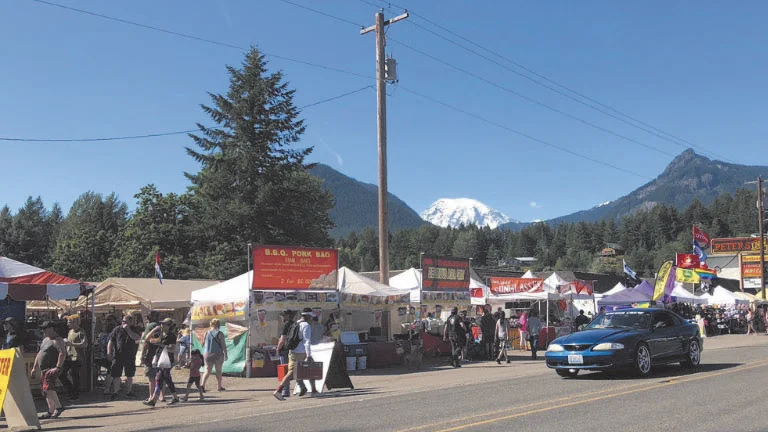
Packwood Mountain Festival
May 2
The Packwood Mountain Festival is held annually in the charming town of Packwood in East Lewis County. This festival celebrates the spirit of the outdoors and showcases the stunning natural beauty of the surrounding mountains.
The festival features live music, a fun run and 5K, food vendors, cultural events and much more! The nearby mountains, with their scenic trails, towering peaks, and breathtaking vistas, provide the perfect backdrop for these activities.
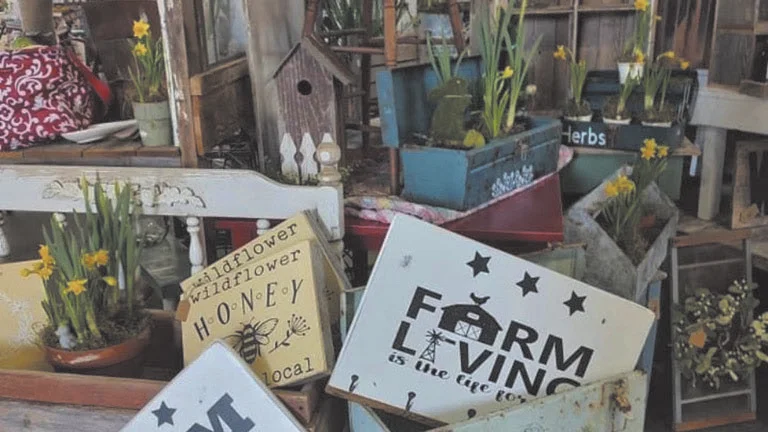
Country Chicks Spring Market
May 8-9
The Country Chicks Spring Market at Southwest Washington Fairgrounds is an annual event showcasing a variety of handmade crafts, vintage items, and unique products. The market is primarily focused on promoting local artisans, small businesses, and independent vendors from the surrounding areas. Visitors can browse through a wide range of items, including home decor, jewelry, clothing, handmades, and much more.
Find more information at: https://www.facebook.com/melanie.sheena
Mother’s Day Brunch on the Chehalis Centralia Railroad
May 9
Treat Mom to an unforgettable experience aboard a 1920s historic tourist train. The joy of celebrating your special someone will leave smiles on your face. As the train journeys through the serene countryside, you will be served a delicious brunch with soft instrumental music filling the air. After brunch, step outside in our open-air car for a view of the river and surrounding pastoral land. This timeless experience is the perfect way to create lasting memories and relive the nostalgia of vintage rail travel.
Departs at 11 a.m.
Purchase tickets at https://steamtrainride.com/
Packwood’s Memorial Day Flea Market
May 22-25
The Packwood Flea Market is held in the charming town of Packwood every year on Memorial Day weekend. This lively flea market draws in locals and visitors from all around, creating a vibrant atmosphere filled with fun and treasure-hunting spirit. The market features a wide array of vendors offering an eclectic mix of goods, including antiques, collectibles, handmade crafts, clothing, home decor, and much more. Strolling through the aisles, visitors can explore the diverse selection of items, discovering hidden gems and unique finds at every turn. Whether you’re searching for a nostalgic item, a one-of-a-kind piece, or simply enjoy the thrill of the hunt, the Packwood Flea Market offers a delightful and memorable day of exploration and discovery.
Memorial Day Service
May 25
The Memorial Day service at the Veterans Memorial Museum in Chehalis is a solemn and poignant event that honors the brave men and women who have served in the armed forces. Held at the museum, which serves as a tribute to the sacrifices made by military personnel, this service pays homage to those who have given their lives in service to their country.
A Tree of Life display in the museum has branches draped with dog tags, which feature the names of 160+ service members and during the ceremony, each name is read aloud. The event typically begins with an opening ceremony that includes patriotic music, the presentation of colors, and heartfelt speeches paying tribute to the fallen soldiers.
Find more information at: https://www.veteransmuseum.org
Megawillapa 2026
May 25
Save the date for Megawillapa 2026 — a one-day, 113-mile bike ride on the Willapa Hills Trail, round-trip from Chehalis, happening Memorial Day, May 25, at 8 a.m. All ages and abilities are welcome. This is an unofficial, self-supported ride. It’s the only Megawillapa of the year due to upcoming trail work.
Free Entrance Day at Mount Rainier National Park
May 25
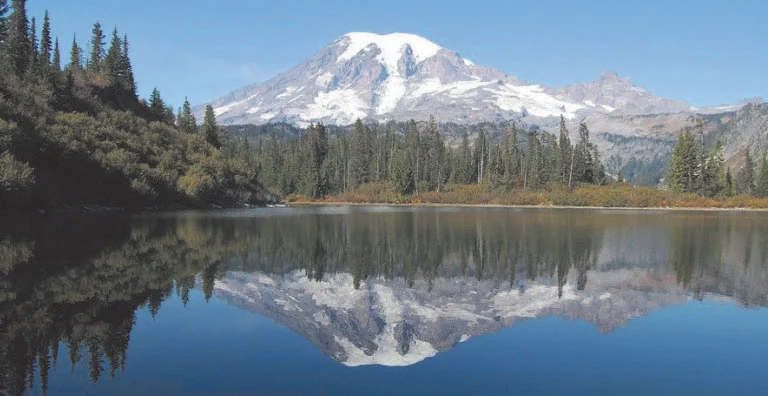
Fee-free days at national parks offer an incredible opportunity for nature enthusiasts and adventure seekers to explore the natural wonders of the United States without any admission fees. These designated days, established by the National Park Service, provide visitors with free access to some of the most breathtaking landscapes and cultural treasures in the country. Whether you’re interested in hiking through majestic forests, marveling at towering mountains, or discovering historical landmarks, the fee-free days make it easier than ever to immerse yourself in the beauty and diversity of America’s national parks. Take advantage of these special days to visit Mount Rainier National Park, partially located in eastern Lewis County. This is just the opportunity to experience the natural splendor and rich history of Mount Rainier.
2026 Free Entrance Days:
May 25: Memorial Day
June 14: Flag Day/President Trump’s birthday
July 3–5: Independence Day weekend
August 25: 110th Birthday of the National Park Service
September 17: Constitution Day
October 27: Theodore Roosevelt’s birthday
November 11: Veterans Day
Find more information at: www.nps.gov/planyourvisit/fee-free-parks.htm
Washington state needs to embrace natural gas ‘bridge’ power production
As the race for renewable energy is being fast-tracked, power plants such as the planned natural gas facility at TransAlta will be key to avoiding blackouts and rising power bills
By Todd Chaput
Executive Director
Economic Alliance of Lewis County
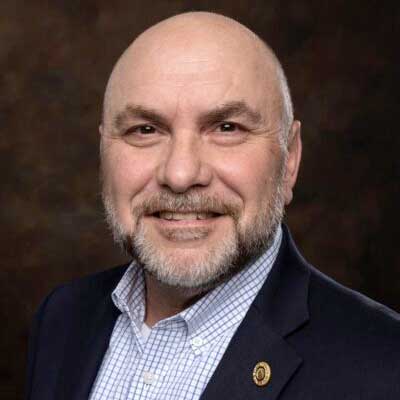
Todd Chaput
Executive Director Economic Alliance of Lewis County
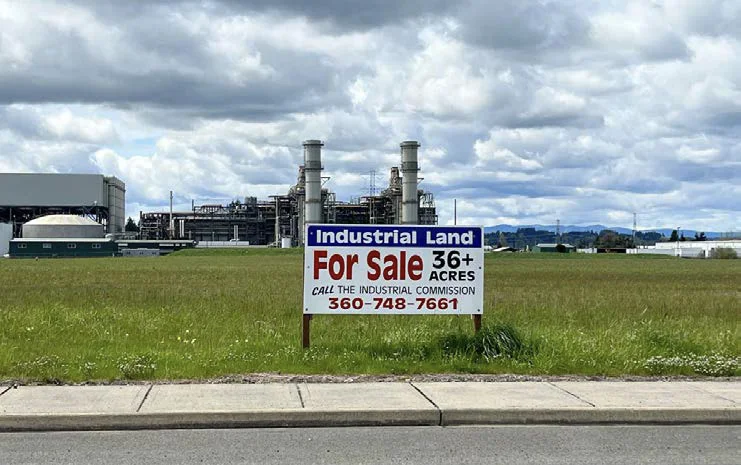
PROPERTY SPOTLIGHT
2001 RUSH ROAD - CHEHALIS
Features:
- 36 Acres
- Electricity: Lewis County PUD
- Water: City of Chehalis
- Sewer: City of Chehalis
- Natural Gas: Puget Sound Energy
Note: Last month’s Property spotlight contained some inaccurate information which is corrected in this version. The Alliance regrets the error.
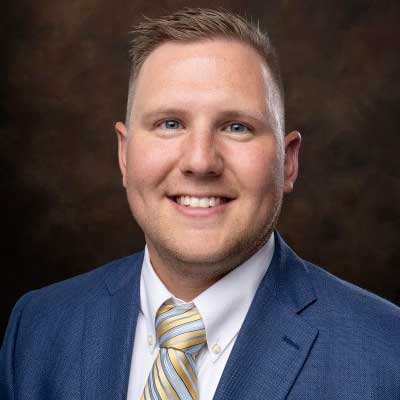
Eric Sonnenberg
Economic Alliance of Lewis County External Relations Manager
For information on this property and others available throughout Lewis County (or to list your industrial/commercial property for sale or lease), contact Economic Alliance of Lewis County External Relations Manager Eric Sonnenberg at 208.206.5407 or [email protected], or go to lewisedc.com.