
Alliance Annual Banquet features WWU econ professor
By The Economic Alliance of Lewis County

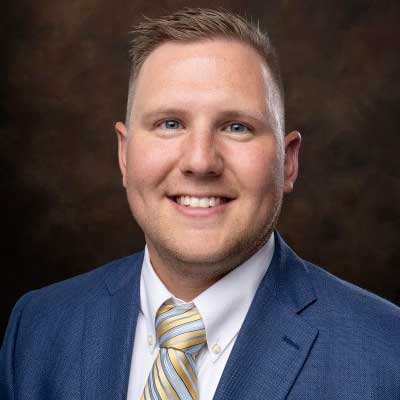
Photo Provided - James McCafferty
The Economic Alliance of Lewis County is featuring a keynote speaker from Western Washington University’s College of Business and Economics for its Annual Banquet taking place Feb. 6 at Jesters Auto Museum in Chehalis.
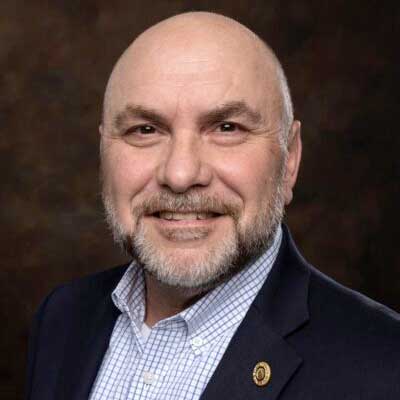
James McCafferty is the director of the Center for Economic and Business Research at Western Washington University.
McCafferty seeks to broaden the connections between the University, the College of Business and Economics and the real world — businesses, non-profits, tribal communities and government agencies — through student internships, classroom based projects and consultative projects drawing on faculty, staff and students.
McCafferty brings a unique perspective and critical tools to problems faced by organizations today based on professional and community service experience at local, regional and national levels. He blends the best approaches from the for-profit, non-profit, government and individual sectors to create blended responses that are effective, efficient and practical while also maintaining long-term sustainability.
McCafferty’s core skill areas include research, financial modeling, business development, branding/identity, marketing, finance, tax and legal issues (from a lay perspective), operations, growth management and strategic partnering.
McCafferty has an MBA from Western Washington University, a Bachelor of Science in Journalism/Public Relations from the University of Oregon, is a Certified Global Business Professional, serves as an officer for the Seattle Economics Council and is a past board member of the Association of University Business and Economic Research.
Q&A
Q: How should people understand the economic data behind the numbers we see in economics news headlines?
A: There’s a famous phrase — lies, damned lies, and statistics — often attributed to Mark Twain, who credited British Prime Minister Benjamin Disraeli, though fittingly, it’s not clear Disraeli ever said it. As economists, we get a front-row seat to how that phrase gets used. In most cases, the problem isn’t that the numbers are lies. It’s that very few people understand how the data are actually produced.
To understand today’s economic statistics, you have to look back to before the pandemic. Even then, many government datasets — the ones people rely on to assess unemployment, wages, job growth, business formation and other reference points — were experiencing a rise in survey nonresponse, which increases what statisticians call “sample error.”
Economic data are still essential for understanding the economy. But they work best when paired with context, transparency, and a recognition of their limits.
Then when the pandemic hit, those traditional datasets couldn’t be assembled quickly enough, so economists turned to available high-frequency data — credit card transactions, mobility data, tolling records, and health data. These datasets weren’t perfect, but they were timely. During that period of rapid economic change, speed mattered.
As we transitioned back to traditional surveys and sources after the pandemic, a new problem emerged: people had stopped responding. Some employment surveys that once had response rates near 80 percent fell to below 30 percent. When response rates fall that sharply, the margin of error can mean that a reported increase is just as likely a decrease.
At the same time, Federal government cost-cutting efforts have reduced sample sizes and changed collection methods. Smaller samples mean higher uncertainty.
Combined, these trends have made portions of today’s federal economic data less reliable.
Economists have grown increasingly cautious about newly released Federal data, especially when the initial estimates differ dramatically from non-government forecasts. Historically, large differences were unusual and often suggested that substantial revisions were forthcoming. Revisions have always been necessary, but the magnitude has increased in recent years, making the revisions themselves newsworthy.
For example, when initial estimates of employment or inflation are strikingly high or low, they make the news. But then so do the subsequent revisions … and people start questioning the validity of the data or whether the whole process could be politically motivated.
It’s not politics. It’s statistics. Economists approach initial estimates based on small samples or non-random samples with care. They probably should not be published as true and accurate since they are so likely to be revised.
What should an informed reader do? You shouldn’t ignore federal statistics, but you also shouldn’t take a single number at face value. Pay attention to revisions. Look at the footnotes. Compare multiple data sources. This is easier than it sounds. At our center, we review and share insights from international, national, and regional sources every day to understand the range of what the data are telling us. Our daily social media posts may become your new best friend for water-cooler discussions.
Q: How do we reconcile the latest economic headlines around inflation and affordability? What’s the difference between inflation, Consumer Price Index, and cost of living?
A: I often think about the old parable of the blind men and the elephant. Each person touches a different part — an ear, a leg, a tusk — and describes something completely different. None of them are wrong, but none of them are seeing the whole animal. That’s a useful way to think about today’s economic headlines.
Inflation, the Consumer Price Index (CPI), and cost of living are all measuring different things. Inflation is about the rate of change in prices — how fast prices are rising or falling overall. CPI is one of the main tools we use to measure that change. It tracks the price of a fixed basket of goods and services each month and reports a single national number.
Inflation, the Consumer Price Index (CPI), and cost of living are all measuring different things.
That single number is useful, but it has limits. CPI assumes everyone buys the same mix of goods every month, even though real households substitute when prices change and seldom buy all the items in the basket. It also doesn’t capture differences across regions, incomes, or household types. And in any given month, a small number of volatile items — like vehicles during the pandemic — can drive the headline figure even if most everyday prices feel unchanged. Most recently, CPI data released has relied on only partial data collection, making the most recent numbers suspect.
Cost of living, by contrast, is what people usually mean when they talk about affordability. It asks a different question: how much does it actually cost to maintain a household in a specific place, and how does that compare to wages? When we calculate cost of living, we track hundreds of items multiple times a year across regions. That’s how we can say, for example, that the cost to live in the Seattle area is roughly 30 percent above the national average, while Bellingham is closer to 20 percent — even though average wages differ across those places as well.
This disconnect helps explain why inflation can be cooling while affordability still feels strained. We’re also living in what economists describe as a K-shaped economy. Depending on your income, assets, and job stability, your personal economic experience may be improving — or getting worse — at the same time as the overall economy shows positive signs.
That matters for public policy. Terms like “affordable” sound clear, but they often lack a shared definition. Are we talking about basic needs like housing and food, or a standard of living people have come to expect? The affordability crisis includes both. Without clarity, policy debates risk talking past each other — like arguing over different parts of the elephant.
Details
The Annual Banquet for the Economic Alliance of Lewis County is set starting at 5:30 p.m. Feb. 6 with a social hour and silent auction, followed by a 7 p.m. dinner and program. A no host bar will be cash only by The Shire. Tickets are $100 per person. A VIP table for 8 people is $1,000 and includes a logo promotion. For more information, call Dolly Tardiff at 360-748-0114.
•••
Note: The Q&A is from Jennifer Nerad, who covers Western’s College of Business and Economics and College of the Environment for the Office of University Communications.
A Q&A with Executive Director Todd Chaput
By The Economic Alliance of Lewis County
The Chronicle
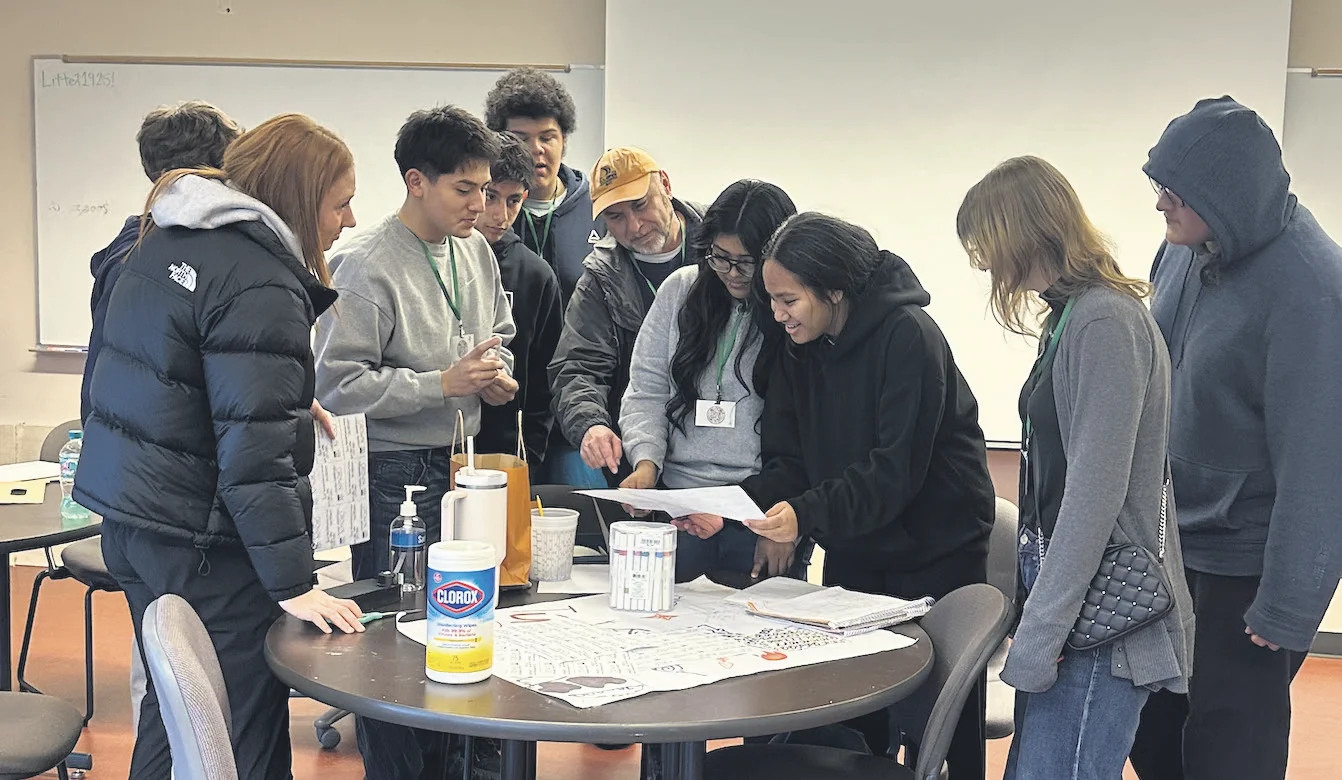
Todd Chaput is the new Executive Director of the Economic Alliance of Lewis County, taking over the position from Richard DeBolt, who retired at the end of the year.
Q: What is your education experience, and also your business history?
A: Studied biology and math at the University of Wyoming.
Q: How long have you been a member of the Economic Alliance of Lewis County?
A: I have worked here for four years.
Q: What is a key for the success of The Alliance?
A: Partnerships. Nothing happens in a vacuum and partners insure stability and engagement.
Q: What do you love most about your industry?
A: The opportunity to improve upon and provide resources to our community for the next generation.
Q: How do you define success?
A: Personally, I define it as a family experiencing genuine happiness and security. Professionally I see it as the willingness of others to join you in efforts that you find important. This shows trust in your leadership and alignment in what you are trying to accomplish. If others are not there to support you, maybe you need to re-evaluate.
Q: Who inspires you?
A: My wife Kerri. Kerri keeps me grounded and focused on what is truly important.
Q: What’s the last book you read?
A: Don’t Believe Everything You Think by Joseph Nguyen
Q: What is your favorite meal?
A: Ossobuco
Q: What do you do for pleasure outside of business?
A: Golf and travel
Q: Where do you live, who are you married to, how many kids do you have (and what is she pursuing) and any pets?
I live in Chehalis and I have a daughter that is studying at Western Washington University. My wife Kerri of 25 years works for the Chehalis School District.
Q: What is something about you (a fun fact) that not many people know?
A: My first name is David.
Discover Lewis County features upcoming events
By The Economic Alliance of Lewis County
DiscoverLewisCounty.com
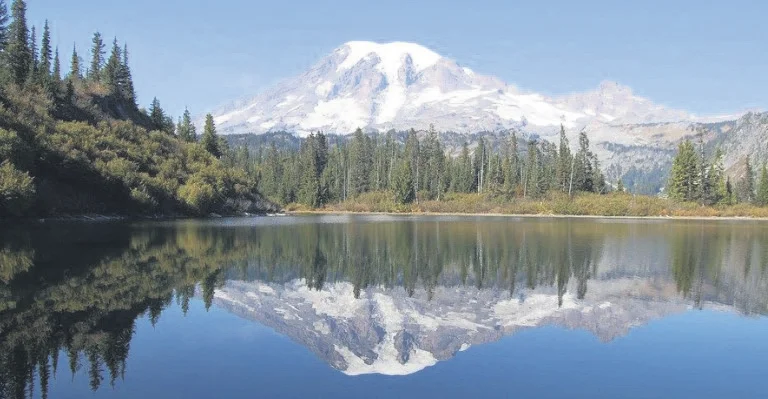
Free Entrance Day at Mount Rainier National Park
Fee-free days at national parks offer an incredible opportunity for nature enthusiasts and adventure seekers to explore the natural wonders of the United States without any admission fees.
These designated days, established by the National Park Service, provide visitors with free access to some of the most breathtaking landscapes and cultural treasures in the country.
Whether you’re interested in hiking through majestic forests, marveling at towering mountains, or discovering historical landmarks, the fee-free days make it easier than ever to immerse yourself in the beauty and diversity of America’s national parks. Take advantage of these special days to visit Mount Rainier National Park, partially located in eastern Lewis County.
This is just the opportunity to experience the natural splendor and rich history of Mount Rainier.
2026 Free Entrance Days:
- February 16: President’s Day (Washington’s Birthday)
- May 25: Memorial Day
- June 14: Flag Day/President Trump’s birthday
- July 3–5: Independence Day weekend
- August 25: 110th Birthday of the National Park Service
- September 17: Constitution Day
- October 27: Theodore Roosevelt’s birthday
- November 11: Veterans Day
White Pass Winter Carnival
Feb. 28 through March 1
The White Pass Winter Carnival is an exciting annual event that takes place at the beautiful White Pass Ski Area.
This carnival is a celebration of all things winter, attracting snow enthusiasts, families, and visitors looking for a fun-filled snowy adventure. The carnival offers a wide range of activities and attractions for people of all ages.
The event features lively competitions, obstacle courses, and event favorite — the life-sized snow castle. The White Pass Winter Carnival captures the essence of wintertime joy in an atmosphere of excitement and camaraderie.
Free Entrance at Washington State Parks
Free entrance days at Washington State Parks provide a fantastic opportunity for outdoor enthusiasts and nature lovers to explore the natural beauty of the state without any admission fees.
These designated days, organized by Washington State Parks, allow visitors to access a wide range of scenic parks, from breathtaking coastlines to lush forests and serene lakes. Whether you enjoy hiking, picnicking, camping, or simply immersing yourself in the tranquility of nature, the free entrance days offer an ideal chance to discover the diverse landscapes and recreational activities available throughout Washington.
Spend the day exploring one of the state parks located in Lewis County including Ike Kinswa State Park, Lewis & Clark State Park, and Rainbow Falls State Park. Mark your calendar and take advantage of these special days to experience the beauty and serenity of these special parks in Lewis County.
The 2026 Discover Pass free days are:
- March 9 — Billy Frank Jr.’s Birthday
- March 19 — State Parks’ Birthday
- April 22 — Earth Day
- June 6 — Free Fishing Weekend
- June 7 — Free Fishing Weekend
- June 19 — Juneteenth
- Aug. 9 — Smokey Bear’s Birthday
- Sept. 26 — National Public Lands Day
- Oct. 10 — World Mental Health Day
- Nov. 11 — Veteran’s Day
You will not need a Discover Pass when visiting a state park, Washington Department of Natural Resources or Washington Department of Fish and Wildlife lands on Discover Pass Free Days. Please note, free days apply only to day use (not overnight stays or rented facilities). Sno-Park permits are still required on free days at designated Sno-Parks during the winter season.
DeBolt has set the path for excellence for the Alliance
Todd Chaput
Executive Director Economic Alliance of Lewis County
Five years ago Richard DeBolt took over the Lewis County Economic Development Council.
Richard soon changed the name to the Economic Alliance of Lewis County, hired a new staff, including me, and eventually bought a new headquarters building located just about between the two Twin Cities.
It was a vibrant time and the Alliance was reenergized. Richard brought a lot of zip into the Alliance. He brought tons of experience and connections developed as he first worked for the Chamber of Commerce for Lewis County, then transitioned into a representative taking care of TransAlta communications and as their legislative liaison.
He was elected as state Representative, where he quickly rose to Minority House Speaker for the Republican delegation. He retired from the position after two decades of service.
He brought immediate recognition to the Alliance, and for those that know Richard, a way to look outside the box to solve problems and dig up opportunities for the economic expansion of Lewis County.
Perhaps most important, he brought in strong leadership to the Alliance Board which just might be his lasting legacy.
Richard isn’t fully leaving the Alliance. He will remain as a strategic partner advising the Alliance and also continuing his efforts to aid the organization as it remains, as its core direction, to help area businesses grow and thrive, and also to attract new businesses to Lewis County.
Richard, thank you for your leadership. You have left the Alliance in a great position to continue supporting the economy of the region.
But now it is time to look forward.
Some of the initiatives the Alliance is launching and augmenting are addressing new challenges such as Artificial Intelligence and automation which are both emerging as key areas for businesses to find new profits.
To that end, the Alliance is hosting a forum titled Discover the Future of Artificial Intelligence, the AI Experience. The forum is set for 3 to 5 p.m. March 25 at the Centralia College Corbet Theatre. An advertisement for the event is on page three of this report. You can register by using the QR code on the advertisement, I thank the sponsors Centralia College and Cascade Computers.
As I help build on Richard’s foundation, we will focus on forming new partnerships and training opportunities, and always use the vast wisdom and vision of the Alliance Board of Directors to forge economic development opportunities. It is refreshing to step into a Board I am already familiar with and so full of the strongest economic leaders in the county.
I remind all what our vision statement is, and I promise to keep it as a guiding light, to recruit, retain and expand.
The vision:
“Our goal is to contribute to the economic vitality of the community by increasing the number of jobs and improving the local quality of life. To accomplish our goal we work to retain our local businesses and aid them in expanding as well as recruit new businesses to the area.
”To that end we have assisted over eighty firms locate here, which provide over 2,300 jobs to our community. In addition, we have worked with over 250 local firms, helping them to expand or strengthen their operations. Finally, the Economic Alliance partners with 100s of members in business, government, and community groups to solve transportation, utility, and regulatory problems.”
I am excited, humbled and ready to go to work for the Alliance and improving Lewis County.
When you step into a leadership role for an agency such as the Alliance, usually you follow one of two director examples: an agency that is poorly run and rudderless, or one that is a powerhouse and running smoothly. Thankfully, I am stepping into the latter and we won’t skip a beat, and instead, continue our expansion of business services.
Again, thanks to Richard for setting the table for the Alliance.
PROPERTY SPOTLIGHT
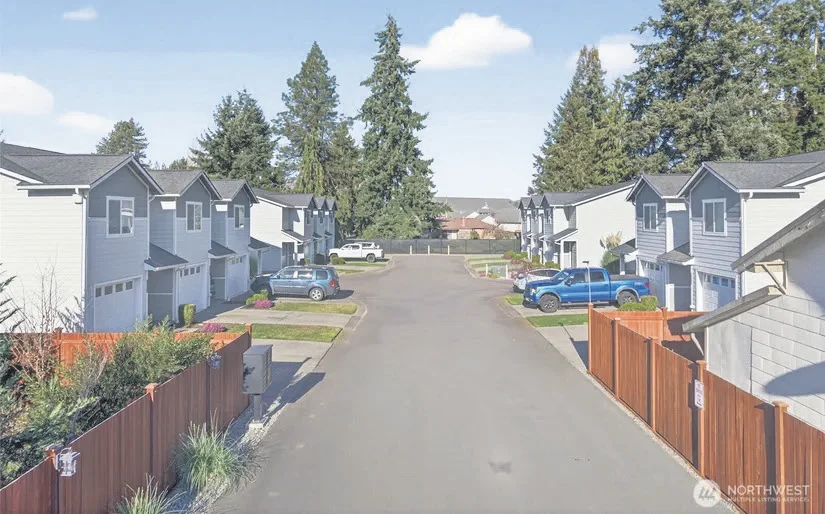
1409, 1 412, 1 413 AND 1414 N OR A L ANE, C ENTR ALIA
- Multi-Family
- $ 3.7 million
Stabilized 11 unit Class A townhome style multifamily portfolio consisting of three triplexes and one duplex, constructed in 2021 and offered together as a single asset. The property has a consistent operating history with strong rental demand, predictable cash flow, and is fully occupied with historically zero vacancy. Clean, verifiable financials. Units feature modern layouts and finishes including quartz countertops, stainless steel appliances, vinyl plank flooring, LED lighting throughout, ductless mini split heating and air conditioning, high speed internet, private garages, and private patios for each unit. Low near term capital requirements due to newer construction. 18 on site parking spaces and well maintained landscaping supported by an automated irrigation system. High quality, low maintenance multifamily portfolio with convenient I-5 corridor access, centrally located between Seattle and Portland, and close to schools, hospital, college, and everyday amenities.
Eric Sonnenberg
Economic Alliance of Lewis County External Relations Manager
For information on this property and others available throughout Lewis County (or to list your industrial/commercial property for sale or lease), contact Economic Alliance of Lewis County External Relations Manager Eric Sonnenberg at 208.206.5407 or [email protected], or go to lewisedc.com.
Lewis County Commissioner board openings
By The Economic Alliance of Lewis County

County seeks alternate for Water Conservancy Board
The Lewis County Board of County Commissioners (BOCC) is seeking a volunteer to serve as an alternate on the Lewis County Water Conservancy Board, a governing board that processes water-rights applications at the local level.
The Water Conservancy Board, which was established by RCW 90.80, works closely with water-rights applicants and the Department of Ecology to make recommendations regarding applications for water-rights changes and transfers. Each new board member must attend Ecology’s four-day (32 hours) training event in the fall and then receive eight hours of continuing education annually to continue to meet state standards. All training is paid for by the Water Conservancy Board.
The board is made up of three regular members and two alternates. At least one of the regular positions must be filled by a water right holder who diverts or withdraws water for use within Lewis County. The current vacancy is for one of the alternate positions.
Residents interested in serving on the board are asked to submit an application, a letter of interest and a brief resume by mail to the following:
Lewis County Water
Conservancy Board
Attn. New Board Member
P.O. Box 1345
Chehalis, WA 98532
Applications must be received by 5 p.m. Thursday, Feb. 26, to be considered. Please note that Water Conservancy Board members cannot be affiliated with any municipal organizations.
For general information about the board, please visit the Department of Ecology’s website at https://ecology.wa.gov/Water-Shorelines/Water-supply/Water-rights/Water-conservancy-boards.
For questions about the vacant position, please contact Water Conservancy Board member David Hilligoss by phone at 360-880-7016.
‘Ride into History’ with SWW Fair as LC celebrates nation’s 250th
Are you a Southwest Washington Fair aficionado? Do you swoon over the thought of rodeos and demolition derbies? Scones and elephant ears? Carnival rides and curly fries? If so, the Lewis County Board of County Commissioners (BOCC) may have the perfect gig for you.
The BOCC is looking to fill vacancies on the Southwest Washington Fair Advisory Board, the group that helps shape decisions about the Southwest Washington Fairgrounds.
It’s an exciting time for the Fair Advisory Board as members are counting down the days to the Aug. 11 launch of the 2026 fair. The theme for this year’s fair is “Ride into History at the Southwest Washington Fair” in celebration of America’s 250th anniversary.
The Fair Advisory Board meets at the Fairgrounds at 5 p.m. the first Tuesday of each month.
To apply, please submit an application and a letter of interest:
- By mail at 351 N.W. North St., Chehalis, WA 98532.
- Via email (attn.: Fair) at [email protected].
- In person at the Commissioners’ Office on the second floor of the Historic Courthouse, 351 N.W. North Street, Chehalis.
For questions about the Fair Advisory Board position, contact the Fair office at 360-740-1495.
County seeks two volunteers for Lodging Tax Advisory Committee
The Lewis County Board of County Commissioners (BOCC) is accepting applications from individuals interested in serving on the county’s Lodging Tax Advisory Committee (LTAC). The county has two openings on the committee:
- One vacancy is for a “provider,” someone who represents a business that’s required to collect lodging taxes in unincorporated Lewis County.
- The other vacancy is for a “user,” someone who represents an entity that would be eligible to receive lodging tax grant funding, such as visitors’ centers, destination marketing groups and nonprofits, including lodging associations and chambers of commerce.
The lodging tax, also referred to as the hotel-motel tax, is a consumer tax on lodging for hotels, motels, rooming houses, private campgrounds, RV parks and similar facilities. Lewis County receives lodging taxes collected in the unincorporated parts of the county and then distributes the money among Lewis County entities that support tourism. LTAC volunteers advise the BOCC on how to best allocate those funds.
The committee generally meets a handful of times during the year, including one all-day meeting in the fall during which members review allocation proposals.
Those interested in serving on the Lodging Tax Advisory Committee should submit an application and a letter of interest in one of the following three ways:
- By mail at 351 N.W. North St., Room 210, Chehalis, WA 98532.
- Via email at [email protected] (include “LTAC” in the subject line).
- In person at the Commissioners’ Office in Room 210 of the Historic Courthouse at 351 N.W. North St. in Chehalis.
For questions about the positions, please contact Rudy Rodriguez at 360-740-1233 or Rieva Lester at 360-740-1419.